
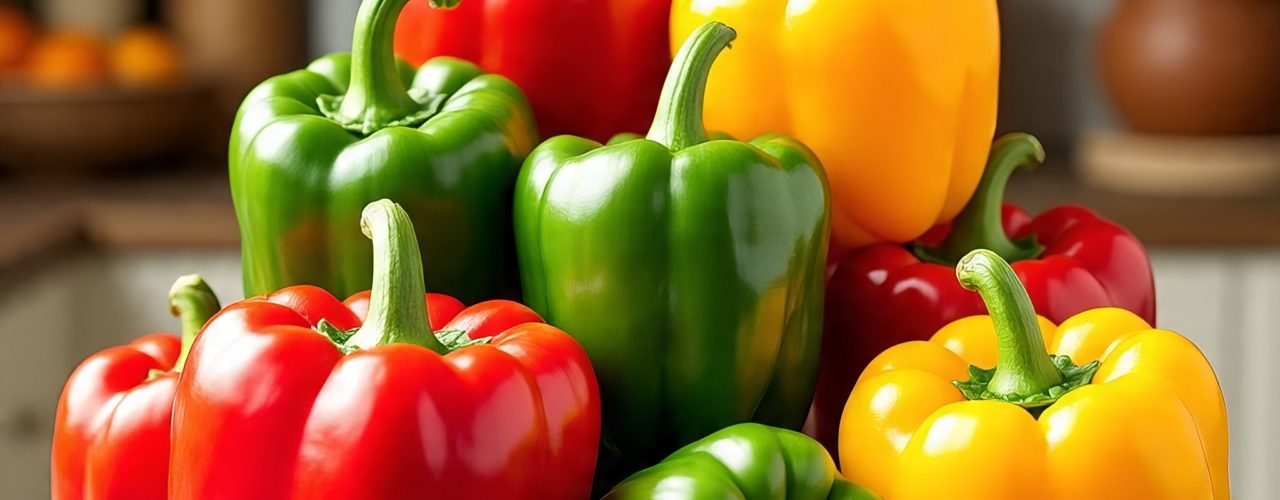
Capsicum annuum
Sustainable Ewe favourites:
California wonder, Yellow Banana, Jimmy Nardello
Quick Reference |
|
| Optimum Soil Temperature | 20-25° |
| Days to Germination | 8-20 |
| Days to Harvest | 80 days from transplant |
| Direct Sow or Transplant | Transplant |
| Distance Apart | 50-60cm |
| Soil pH | 5.5-7.0 |
| Annual/Biannual/Perennial | Annual |
History |
| The name Capsicum is derived from the Greek word Kapto, meaning “to bite”.
Also known as Bell Peppers, Sweet Peppers, Apple Peppers, Cucumber Peppers, Round Chilis, Papurika (Japan) Originally from Central and South America. When Christopher Columbus introduced capsicums and other peppers to Europe the only spice the Europeans were familiar with that contained heat was Pepper. Hence the fruit became known as peppers. |
Growing |
| Start seeds out in a greenhouse or on a sunny windowsill, prick out into larger pots when the plants reach 5cm. Capsicums are heat lovers so wait until November/December when plants are 10-15cm harden plants off and plant out in position with fertile soil and full sun.
Keep gardens weed free and mulch to keep soil moist. Taller varieties may require staking. Colours and flavours change as the capsicum mature, however a capsicum can be harvested at any stage. A ripe capsicum should feel solid but sound hollow when tapped. Harvest by cutting – never pulling, pulling could damage both the fruit and the plant. Storing harvested Capsicum: Keep in fridge for up to one month. but bring to room temperature before using – this warms the sugars and sweetens the flavour Seed Saving: Self pollinating though insects will pollinate. Isolation distance between varieties of 30m. 10 plants are required for genetic diversity. Seed Life: Four years |
Fun Facts |
| Capsicum colours are not limited to red, yellow, orange, green. They can also be found in purple, white and brown.
Technically Capsicum is a fruit. Green Capsicum is simply unripe. It will eventually change colour. However, Capsicums can be eaten at any stage of development, although the vitamin C content increases with ripeness and so does the sweetness. They score ZERO on the Scoville Scale. The only pepper that does not contain capsaicin (the thing that makes peppers hot). They can have either 3 or 4 lobes Red, orange, or yellow are generally sweeter than green or purple. Yellow and orange have a milder flavour that red. Excellent source of Vitamin A, C, E, B6. Red capsicums have twice the vitamin C and beta-carotene of green capsicums Largest producer of capsicums China, followed by Mexico and Turkey. Named ‘pepper’ as they had a similar taste to black pepper (Piper nigrum) even though they are not related. The worlds largest Capsicum was grown in Israel and was 680 grams. |
Problems |
| Sclerotinia – soft brown rot developing into fluffy white growth. Usually in cool, humid conditions. Improve drainage. Practice crop rotation.
Virus – Streaking in foliage. Control pests that may spread the disease such as aphids or thrips. Destroy infected plants. Plant resistant varieties.. |
Pests |
| Aphids – plant wilts, leaves puckered and distorted. Insects under leaves or on new growth. Water regularly in dry weather.
Thrips – Leaves silvery and dehydrated with brown specks on the underside. Common in dry weather. Control weeds. Keep well watered |
Companion Planting |
| Carrots, Onions, Tomatoes |


